
START HERE
Move The Needle: Be A Change Agent

SUNDAY SESH: ABOUT ME
I’m a 25+ year “hand’s on” consumer investor focused on transformative change—and now a full-time operator in the cannabis sector.
I’ve led over $4BN of active investments across public and private companies throughout the capital structure—from consumer startups to legacy turnarounds—at the intersection of internal change influenced by rapid and relentless secular change.
I began my career at Soros Private Equity after banking, spent over a decade at Magnetar Capital joining near its inception to become a Senior Portfolio Manager, and later founded Vindico Capital, a concentrated “constructivist” fund focused on small-to-mid cap transformations.
Over the past 5 years, I’ve led a “cannabis-first” growth strategy from the ground up for a NYSE-listed company.
Whether an engaged investor—or an aligned Board Director and operator from within—the common thread has been partnering with management teams to navigate and execute change—with the humility, grit, and expertise required to empower C-suites and boards to act.
When you focus on change for as long as I have, you get to invest across nearly every sector and cycle. With time, I’ve specialized in consumer: CPG, staples, cannabis, beverages, alcohol, tobacco, restaurants, retail, apparel, hospitality, entertainment, media, technology, and more. Why? Because I’m obsessed with “consumerism”—the transformational forces that drive what, how, and why we buy.
MOVE THE NEEDLE: BE A CHANGE AGENT
My #1 goal is to move the needle of culture.
My relationship with cannabis started over 30 years ago. My curiosity during high school led me to a NORML meeting on campus at Columbia University as a freshman. It was in 1996, right before Prop 215 was finally approved in CA. I learned more about the benefits of the plant and the grassroots effort to legalize it, and the rally sent me down the path as an economics major to deeply analyze the horrific social and economic impacts of prohibition.
I concluded then that the government’s view of cannabis—which has been used medically for over 10,000 years—was built on a mountain of lies, racism, and deception now spanning 80+ years. These barbaric laws destroyed millions of lives—mostly black and brown men and their communities—while incentivizing organized crime and violence in our streets. That simply didn’t sit right with me. I’ve been on a mission ever since to fight for change to give this plant and those harmed their fair chance at redemption.
I felt strongly then—which is less controversial now—that legalization would provide net benefits across the spectrum: from unwinding 50+ years of systemic racism and end the futile war on drugs; creating a new industry built on wellness growing millions of jobs and raising desperate funds for our government; and providing new standard of care solutions to many healthcare issues while curtailing today’s opioid crisis.
I became a champion of legalization behind the scenes and always “on the low” for fear of enforcement and reputational harm—of which I was exposed to many including from the NCAA, Wall Street, and of course the government. I began my cannabis journey first as a consumer and activist, then an advisor and investor, and now as an operator for one of the largest brands in the cannabis value chain.
CANNABIS IS A PERFORMANCE TOOL
I was never a “dead head” nor do I consider myself a “stoner”—but rather a high-performing (but definitely rebellious) kid that didn’t take the “traditional” path my CV claims. By 13, I was a 2nd Degree Blackbelt in Taekwondo. Next, a D1 All-Academic top-ranked golfer that happened to also be very good at school. I also had a social life, filled with misfits and “degenerates” like me. I had talent, but the secret was always curiosity, discipline and working my ass off no matter what I passionately pursued. Still do today.
To win on the field and in the classroom—especially with the insane amount of training, traveling and studying over dual seasons at an Ivy League institution—I simply couldn’t couldn’t afford to be hungover or strung out on pain meds.
In my late teens, 20’s, 30’s—and now late 40’s—I consistently found cannabis to be a valuable “tool” to help me perform. From avoiding addictive pain meds, to dealing with my Type-A anxiety and pressure, to optimizing my sleep, to unlocking self-compassion to help solve major life and work problems, and avoiding alcohol which for me was always a painful waste of time, money and calories. Decades later, I’ve replaced several “standard of care” solutions with cannabis as the industry matures.
Some of my fondest memories over the years—from concerts, to food, to travel, to dating, to simply hanging with friends—all involve cannabis. And some of my darkest moments over the years—from injuries, to slumps, to breakups, to deaths, to work stress, to depression, to pains of parenting—all involve cannabis to heal.
There when I needed it: with friends on occasion, or now more typically, alone in the quiet of the night. And never on the clock or when I needed to actually perform, luckily. A tool, never a crutch.
These days as a consumer, I’m on the hunt for some of the most exclusive and exotic batches grown by some of the best talent throughout the country. I’m in deep on cultivars and genetic integrity, keeping detailed notes to learn and capture the experience. It helps me to understand and compare world-class brands, strains and consumer trends, and catalog the effects to help me perform. As long as it’s clean and grown with unbridled passion, I’m chasing it. My weed fridge is never empty. I’m also very much in the weeds on scientific research to back up “bro science” that I’ve witnessed for myself and others for 30+ years.
MY DIFFERENTIATED CAREER PATH
After college I didn’t know what the fuck I was going to do, especially since I spent nearly 10+ years training every day often for 10+ hours a day. But I had a passion for science, business and investing at early age. Part growing up with an immediate family full of entrepreneurs, college-nevers, and hustlers; and part opening my first brokerage account when I was 12 with a deep passion for both Wall Street (1987) and GoodFellas (1990). My tolerance for risk taking and high pressure over long-periods of time, combined with self-belief and grit were my advantages early on.
Wall Street seemed like a good fit.
First as a banker at Merrill Lynch, I learned from my clients like KKR, Blackstone, and TPG on what made a good business and an attractive investment. I immediately wanted to be on their side of the table, and after a few years I joined Soros investing in buyouts and growth equity where I learned to do deals, take risk, and provide flexible capital to solve problems. Soros was and is an idol of mine so it was a dream.
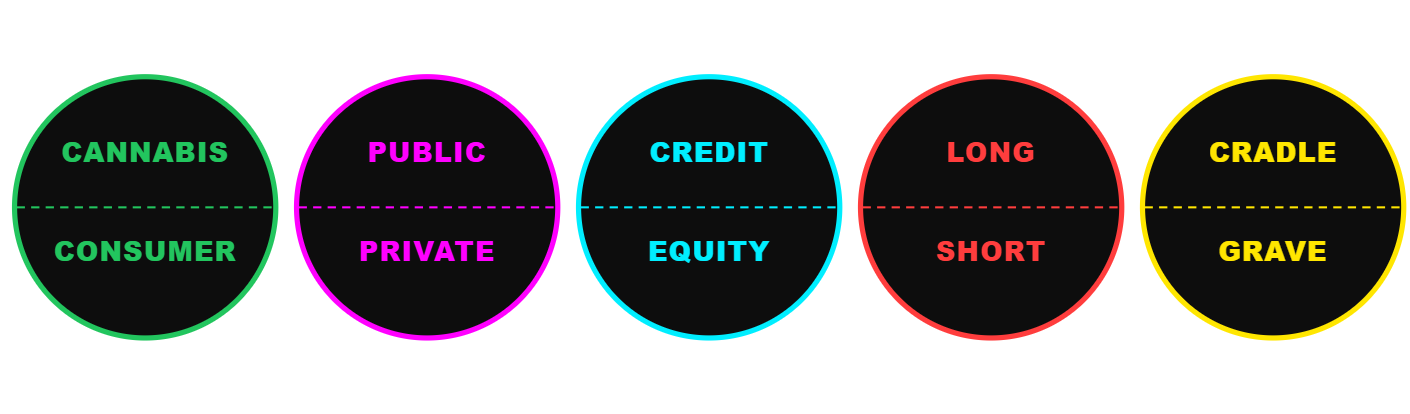
After Stanford Business School, I joined Magnetar Capital—an “upstart” hedge fund that grew to $15BN in AUM where I helped build and scale several businesses as an eventual Senior Portfolio Manager. Public and private. Debt and equity. Long and short. Startups to distressed/turnarounds. All leveraging a deep fundamental toolbox to pursue (and compare) opportunities across the capital structure with a “hand’s on” constructivist approach to push for change when needed. I was an early adopter of the “friendly activist” approach and spun my strategy into Vindico Capital which I ran for 4 years (and still do, all family capital).
From the beginning I always told it to C-suites straight, but with humility and perspective to get them to act on their own with accountability. It’s still my approach to this day.
If there’s a common thread to my investing approach, I always focus on transformative change rooted in fundamentals. Typically, I harness monumental secular themes that cut across sectors—and then sort through the “winners and losers” to monetize a highly variant perspective. With decades of experience, I know it when I see it.
Cannabis is a great example of this—and why my worlds collided about 8 years ago when a few of my portfolio companies were starting to surface cannabinoids, and conservatives like John Boehner were starting to dive in. I took that as a major sign that this was a generational opportunity for folks like me to not only create great businesses, but for me personally, to really move the needle of culture.
While that was (and still is?) taboo inside Wall Street, this massive green wave has afforded me the opportunity to come clean, pay it forward, and move the needle.
We are just getting started.
Welcome to SUNDAY SESH.