

WHAT ACTUALLY MATTERS
The Mirror & The Window: 20 Years After the Farm

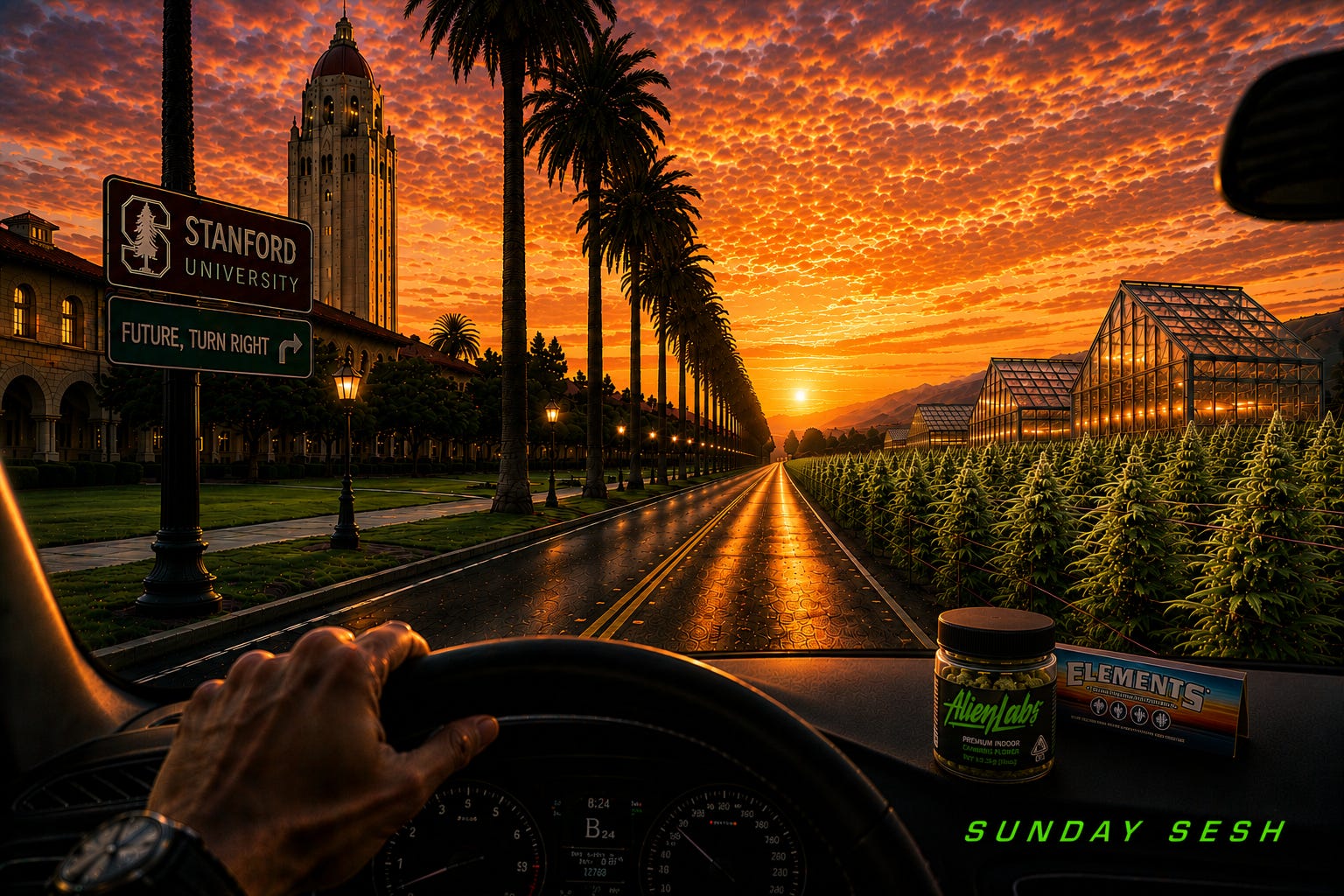
As time compresses, I find myself reaching for the pause button whenever it’s in reach. And last week was that perfect opportunity, as I shuttled back to the Farm to celebrate my 20-year business school reunion.
Let’s be honest: reunions are strange. Time feels different. You’re suddenly back in the fishbowl with friends you may not have seen in 10 or 20 years. It’s like peering into a mirror and a window at the exact same time.
The mirror forces introspection—to see your life through the classmates who knew you before much of your story was written. Who you were then. What you thought mattered. And what actually happened.
At the same time, the window offers perspective—to see the arc of friends’ lives in a way no CV ever captures. The real version shaped by timing, judgment, luck, relationships, and reinvention. And most importantly, how they handled it.
For the first time in a while, time froze. I wasn’t obsessing over what comes next. Perhaps because I was surrounded by friends asking themselves the same question. Nor was I ruminating on what came first. Perhaps because these were friends who already knew.
As part of the reunion, I was asked what advice I’d give my classmates. It’s a humbling question given the audience—and one that took a few quiet nights to answer.
So for the younger crowd staring out the window—or frankly, the older subs looking into the mirror—here are three critical lessons I’ve learned along the way. I hope you find them valuable.
Welcome to SUNDAY SESH.
1/GET CLEAR
When we’re just starting out, we often reach for the path directly in front of us. We listen to friends and parents. We search for prestige and titles. We follow momentum.
I’m no different. Coming out of undergrad—nearly 6 years before grad school—I literally fell into banking with no fucking clue what bankers actually did. Ironically, those early—and painful—years provided clarity. I quickly knew I wanted to sit on the other side of the banker’s table—either taking risk or taking the reins of these businesses seeking counsel. That led me to principal investing—something I also knew very little about growing up—until I realized investing alone wasn’t the full expression of what I wanted to do.
The truth: I didn’t have a vision for my future.
For me, business school wasn’t about pivoting careers as much as stepping off the NYC-centric finance treadmill. It forced me to look around. Learn new tools. And most importantly, surround myself with talented people searching just like me. Being in the epicenter of innovation helped immensely. I absorbed the early waves of transformational change we now take for granted. And what it would take for these builders to bring those visions to life.
Twenty years later, much of what I’ve invested in—and still invest in and write about today—was catalyzed during those indelible years.
At some point, you have to stop optimizing for what looks good and start focusing on what actually lights you up. Not because every day is supposed to feel magical—that’s a ridiculous expectation—but because this game is simply too hard otherwise. You’re not going to survive the constant uncertainty, doubt, long hours, setbacks, assholes, and competition unless some part of you genuinely loves the game you’re playing.
Two decades later, my classmates who seemed most fulfilled weren’t necessarily the people with the cleanest résumés or the highest paychecks. More often, they found alignment between what energized them, what they were good at, and what the world valued.
My advice: get clear on where you want to go as early as possible. Because if you don’t, life has a funny way of creating a path for you.
You simply can’t hit what you can’t see.
2/ADAPT OR DIE
While I firmly believe you should get clear on your vision, you must not get attached to your story.
Your vision and your story are two completely different things. Your vision captures what gives you energy, aligns with your values, and reflects who you want to become. Your story is simply the current expression of that vision.
Like any great saga, it has to evolve. Hold on too tightly to an old chapter, and you risk turning your identity into a stagnating trap.
Let me give you a personal example: About 10 years ago I realized my story was attached to a dying business model. I saw clearly where the hedge fund industry was headed—toward siloed pods with very tight constraints—and I started questioning my role despite the decades of hard-earned reps.
Could I have succeeded? I’d like to think so. But rather than find out, I realized what was required to win conflicted with my vision. And I knew I had to make a change.
Twenty years ago, some classmates were absolutely convinced they knew what their life would look like. But what struck me most at the reunion wasn’t who “succeeded”—it was how many classmates ended up somewhere entirely different than they originally imagined. Of course luck and tragedy play a huge part, but many ultimately found paths better aligned with who they became.
Today, the world is changing faster than ever. AI is rewiring workflows and careers in real time. Business models and industries are being disrupted overnight. One day you may wake up and realize your current chapter is over. Sometimes by choice. More often by necessity. And when that happens, take stock of your vision, stay curious and willing to learn, and accept that L’s are required for W’s.
Then start writing the next chapter before the old one writes it for you.
3/GET FIT
In a world moving this fast, taking control over what you actually can control is paramount. And my physical and mental health sit at the top of that list. I’ve been clear in the past: today’s pace of change will eat you alive if you’re not prioritizing both.
Unsurprisingly, my classmates who were in the best shape 20 years ago are still the ones in the best shape today. Typically retired college athletes or ex-military, they figured out early that fitness wasn’t about aesthetics.
It was about setting a standard.
Twenty years later, that standard has broadened. More classmates were prioritizing health beyond the gym. Meditation, yoga, recovery, therapy, religion, and overall wellness were recurring themes. And to my enthusiasm, I had multiple unsolicited conversations about plant medicine like cannabis and psychedelics.
For me, I certainly was not in that “fit bucket” back in grad school. Hardly. Although I was a competitive D1 athlete, I simply lost my way after college. I ate “fine,” but I was incredibly atrophied—routinely skipping the gym for the bar. A casual run or quick rumble on the mat made that painfully obvious. Worse, the meditation and visualization habits from my competitive days were long gone too.
Back when I was competing, I was repeatedly coached: “as your body tires, so does your mind.” When you’re physically depleted, you make terrible decisions. In my sport, that was a recipe for disaster.
Somehow I ignored these lessons. And man, were those painful to relearn as I approached 30. Then, I had moved from the private markets side of my firm to our growing public markets team. On my first day, I quickly realized I was surrounded by three Ironmen, including my boss and the founder of the firm. Already in their 40s, they somehow never tired. Even after 12-hour days, they still hit the gym or biked home. Regularly.
My youth and adrenaline got me through the first year, but by Friday I was fucking gassed. My body simply couldn’t compete. Public investing demanded speed, rapid information processing, and the ability to stay calm as new data streamed in.
One of my stronger assets—my mind—became a huge liability.
I knew I had to make a change.
The best gift I ever gave myself was hiring a trainer on my 30th birthday. I’ve been working out religiously ever since. Nearly 20 years later, exercise has become oxygen. And the real benefits come from how I think—especially during times of pain and uncertainty. Over the past two decades, that standard has expanded: meditation, recovery, journaling, and other rituals now anchor my daily life.
My advice: it’s never too late to reclaim control. Get your ass and your mind fit.
You will never regret it.
4/FIN
Time compresses for all of us eventually. The years start moving faster. Responsibilities pile up. And chapters must close whether we’re ready or not.
Which is why—for me—what actually matters is simple: get clear, stay adaptable, and protect your body and mind. Those assets compound too.
Maybe that’s why reunions exist: a mirror to reflect on who you’ve become, and a window into who you still might be.
Keep going.
Onward,
SUNDAY SESH
***Disclaimer: Not financial or investment advice, do your own work; this is intended for sophisticated investors. No conflicts, no MNPI, these are my own opinions, and no representation that what’s presented is accurate. As disclosed, authors of SUNDAY SESH hold common shares and derivatives of companies mentioned and they have no obligation to update or disclose changes. No representation is made as to accuracy or completeness. Past performance is not indicative of future results. And as always, cannabis was used frequently in the authorship to creatively solve problems. Know what you own.